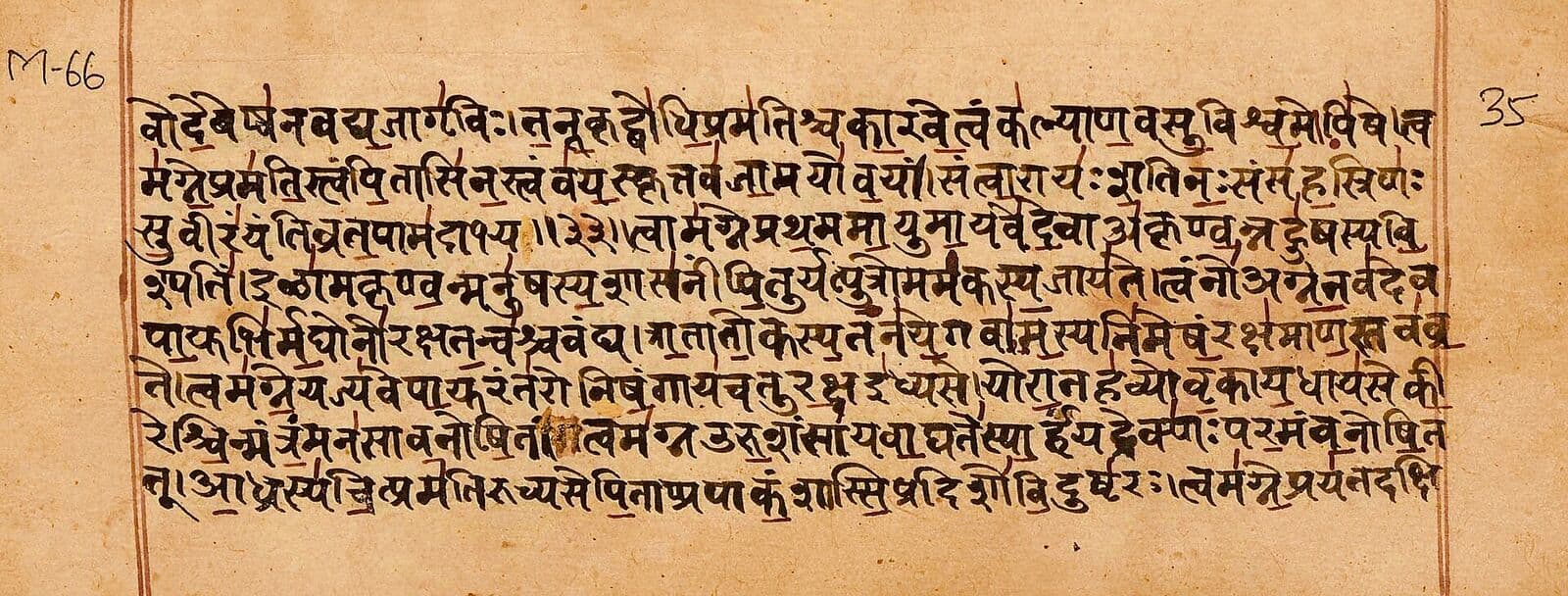
Scriptures
Reading the Isha Upanishad Today
Eighteen verses on having and letting go — the shortest of the great Upanishads may be the most contemporary.
The Isha Upanishad is eighteen verses long. You can read it in the time it takes to drink a cup of tea, and you can spend a lifetime with it and not be done. Gandhi famously said that if all the scriptures were reduced to ashes and only its first verse remained, Hinduism would survive.
The first verse
Ishavasyam idam sarvam — all this, whatever moves in this moving world, is dwelt in by the Lord. Therefore, the verse continues, enjoy by renouncing; do not covet, for whose is wealth? In one breath the text refuses both the world-denier and the world-devourer. The world is not to be fled — it is saturated with the divine. Nor is it to be grasped — it was never ours to grasp. The prescribed relationship is enjoyment through release, tena tyaktena bhunjithah, a phrase that reads like a riddle until you notice it describes everything we actually love well: music, which cannot be clutched; a child, who must be continually released into their own life; breath itself, which is only ours on loan.
Enjoy by letting go. Do not set your heart on another's wealth — for whose, in the end, is wealth?Isha Upanishad, verse 1
Work without entanglement
The second verse is a surprise. Having declared the world divine, the text does not counsel retreat but engagement: one should wish to live a hundred years kurvann eveha karmani — precisely by doing works. Action does not cling to the one who acts in this spirit. Here, in miniature, is the whole doctrine the Gita will later expand into karma yoga; scholars have long noted that Isha 2 and the Gita's teaching on desireless action are the same seed at two stages of flowering.
Knowledge and its shadow
The middle verses execute the Upanishad's most startling move. Into darkness enter those who pursue ignorance, the text says — and into greater darkness those who delight in knowledge alone. Vidya and avidya, contemplation and worldly competence, are both praised and both declared insufficient; the one who knows them together, the text insists, crosses death by the one and reaches immortality by the other. It is difficult to think of a more contemporary warning. We live amid unprecedented technical mastery twinned with unprecedented confusion about what mastery is for. The Isha would not be surprised by our situation. It diagnosed it three thousand years ago: partial knowledge mistaking itself for the whole is more dangerous than simple ignorance, because it is armed.
The face of truth
The Upanishad closes with a prayer of unbearable tenderness. Hiranmayena patrena satyasyapihitam mukham — the face of truth is covered by a golden disc; O Pushan, withdraw it, that I who love the truth may see. The gold that hides truth is not evil. That is the point. It is everything shining — success, pleasure, even religious experience — that we settle for instead. The seer does not ask for the gold to be destroyed, only moved aside. It is the politest revolution in world scripture, and it is addressed to each reader personally, every time.
About the author
Prajna Insights Editorial DeskEditorial Desk
The collective byline for essays researched, drafted, and edited through the Prajna Insights editorial process, including AI-assisted drafting reviewed under Kiran Karanam's editorial responsibility.
Related Articles

Darshana
What the Upanishads Mean by 'Self'
Atman is not a ghost in the machine. The Upanishads are pointing at something both nearer and stranger than 'soul'.
Mar 4, 2024·12 min read
Darshana
What is Dvaita Vedanta?
An introduction to the profound philosophy of Madhvacharya and its relevance today.
May 8, 2024·10 min read
Tradition
The Guru–Shishya Parampara
The living tradition of knowledge transmission in Sanatana Dharma.
May 1, 2024·9 min read