Temples
Ellora: Carving a Mountain into Prayer
The Kailasa temple was not built. It was revealed — cut downward out of living rock, one hammer-blow at a time.
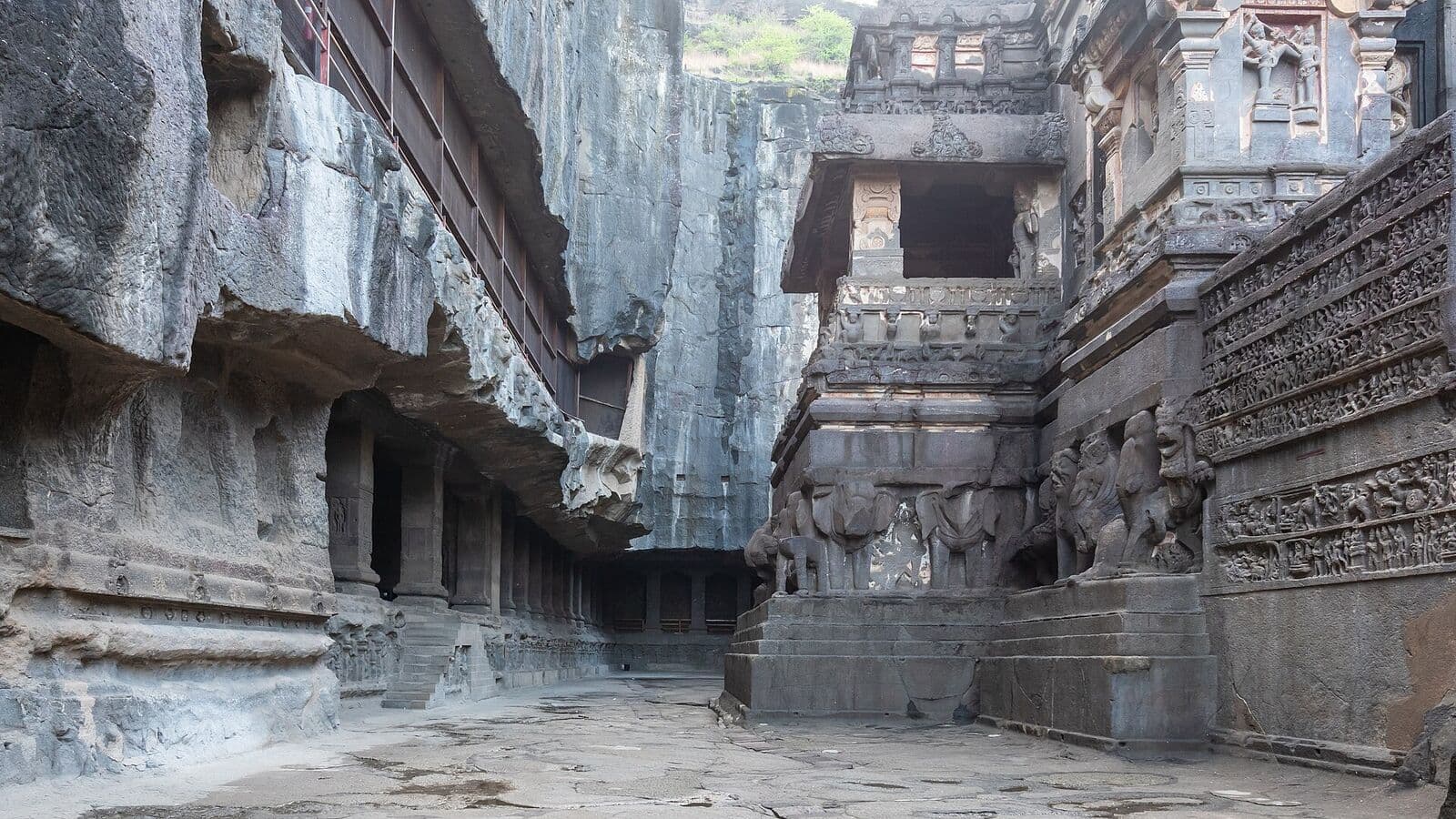
Every other great building in the world was assembled — stone brought to stone, upward, against gravity. The Kailasa temple at Ellora was made the opposite way. In the eighth century, artisans of the Rashtrakuta dynasty walked to the top of a basalt scarp in the Deccan and began cutting down. Decades and an estimated two hundred thousand tonnes of removed rock later, a complete temple complex stood in a pit of its own making: tower, halls, gateway, bridges, life-size elephants, victory pillars — every element carved from the one continuous mountain, nothing added, nothing joined. It is the largest monolithic structure on earth, and it was made entirely by subtraction.
Architecture as revelation
The method imposes a terrifying discipline: no scaffolded second thoughts, no replacing a miscut block — the block is the mountain. The planners had to hold the finished temple complete in the mind, then remove everything that was not it. Sculptors' manuals of the tradition describe the murti as already present in the stone, waiting for the carver to clear away its coverings; at Kailasa that doctrine was executed at the scale of a building a hundred metres long. The temple was not constructed. It was disclosed — which makes it the most literal architectural statement ever made of the tradition's central claim about the self: the divine is not fabricated by effort; effort removes what obscures it.
The temple was always inside the mountain. The chisels were only telling it so.
The dedication compounds the metaphor. The temple is named for and modelled on Kailash, Shiva's Himalayan abode; its lower storey is ringed by rock-cut elephants who appear to carry the whole mass on their backs, and one celebrated panel shows Ravana beneath the mountain, straining to shake it while Shiva pins it with a toe. The building thus contains a sculpture of itself being unshakeable — an architectural joke, and a theological one, told in basalt.
One cliff, three religions
Kailasa is cave sixteen of thirty-four. Along two kilometres of the same scarp run twelve Buddhist monasteries and prayer halls, seventeen Hindu temples, and five Jain shrines, excavated across four centuries in overlapping campaigns. The eighth-century Deccan produced, in one cliff face, a stone anthology of Indian religious life — the Buddhist viharas with their serene colossal teachers, the Shaiva caves in full dramatic voice, the Jain Indra Sabha carved with jeweller's delicacy — side by side, sharing masons, patrons, and a horizon. Ellora is what religious plurality looks like when it is a fact of daily labour rather than a slogan: three traditions, one mountain, chisels answering chisels across the gorge for four hundred years.
Standing in the pit
Visitors today enter through the gopuram-like screen and stand in the courtyard's shadow, mountain walls rising on three sides, the freed temple in the middle still connected to the earth it came from — because it never left. UNESCO listed the caves in 1983; engineers still debate the workflow; no one has ever proposed that it could be duplicated. But the deepest impression is not of scale. It is of patience — generations of hands executing one idea without loss of nerve — and of the idea itself, which the pit preserves better than any text: that revelation is not addition but removal, and that somewhere under every mountain of accumulated stone, a temple is waiting for someone to begin.
About the author
Prajna Insights Editorial DeskEditorial Desk
The collective byline for essays researched, drafted, and edited through the Prajna Insights editorial process, including AI-assisted drafting reviewed under Kiran Karanam's editorial responsibility.
Related Articles
Temples
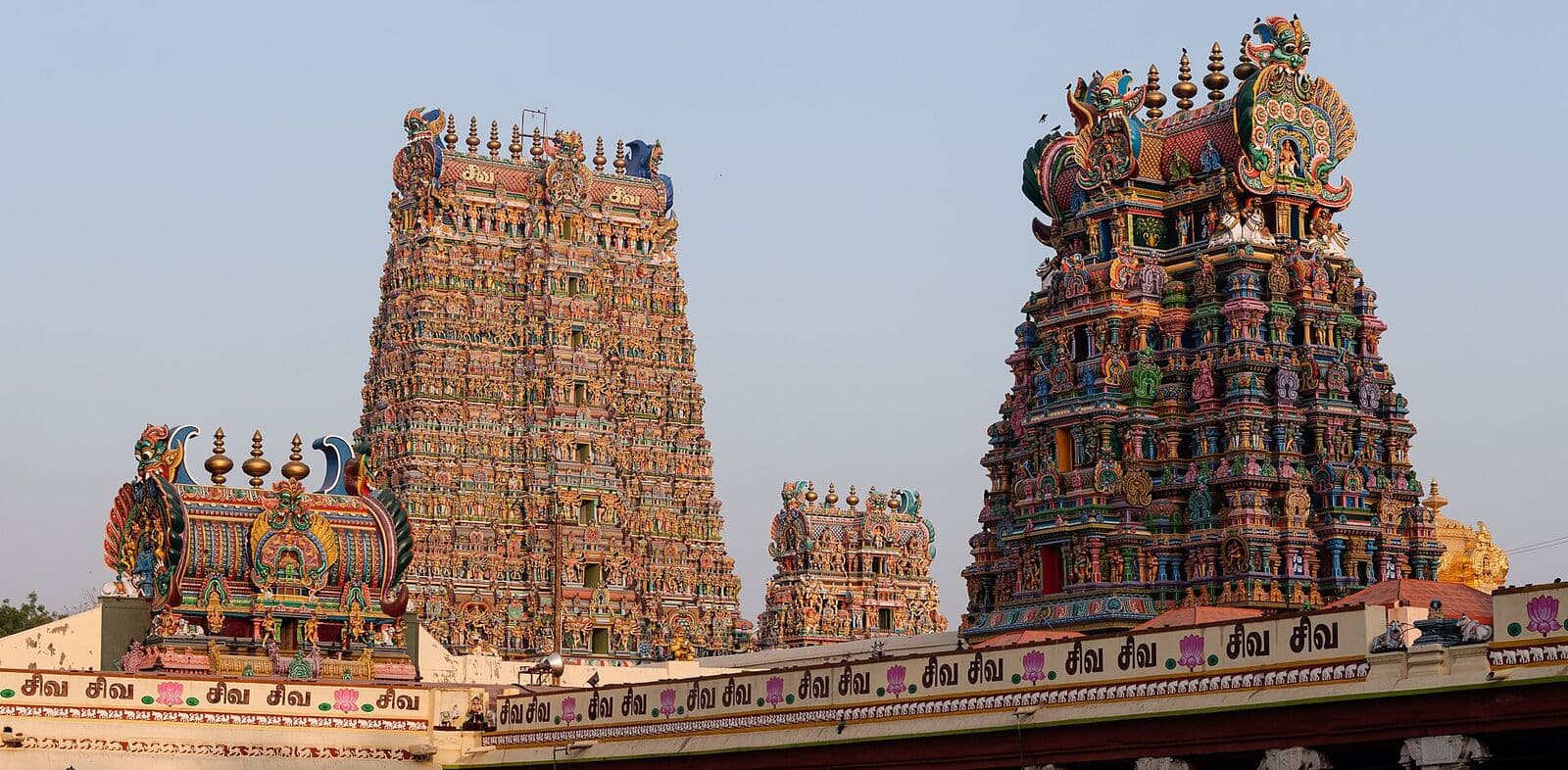
The Grammar of the Gopuram
Why the towering gateways of South Indian temples are built the way they are — a thousand-year architectural syntax, decoded.
Apr 11, 2024·10 min read
Temples
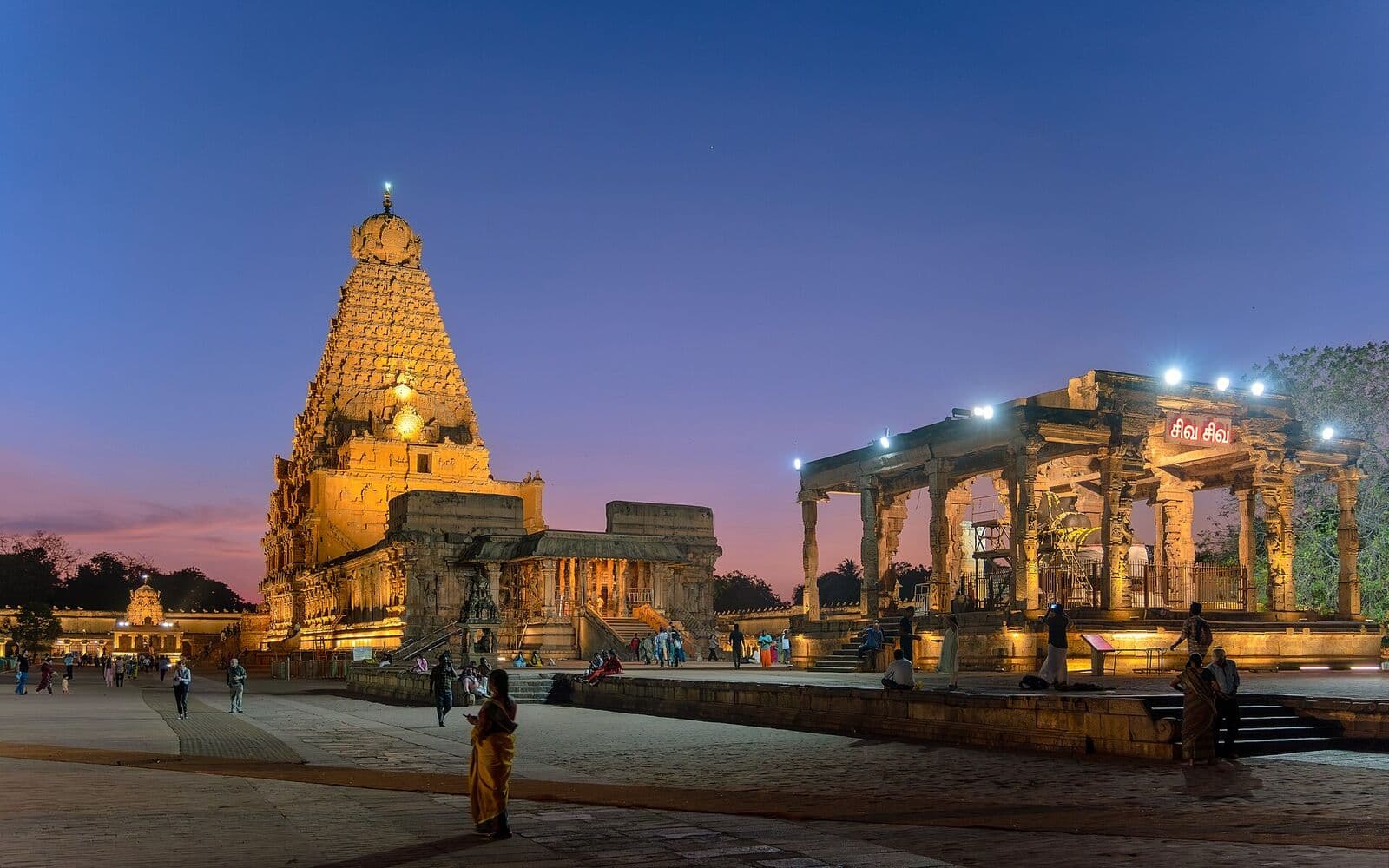
Chola Temples: Engineering Eternity
The Brihadisvara temple at Thanjavur is a thousand-year-old feat of engineering audacity — built without mortar, standing without repair.
Mar 7, 2024·11 min read
Temples
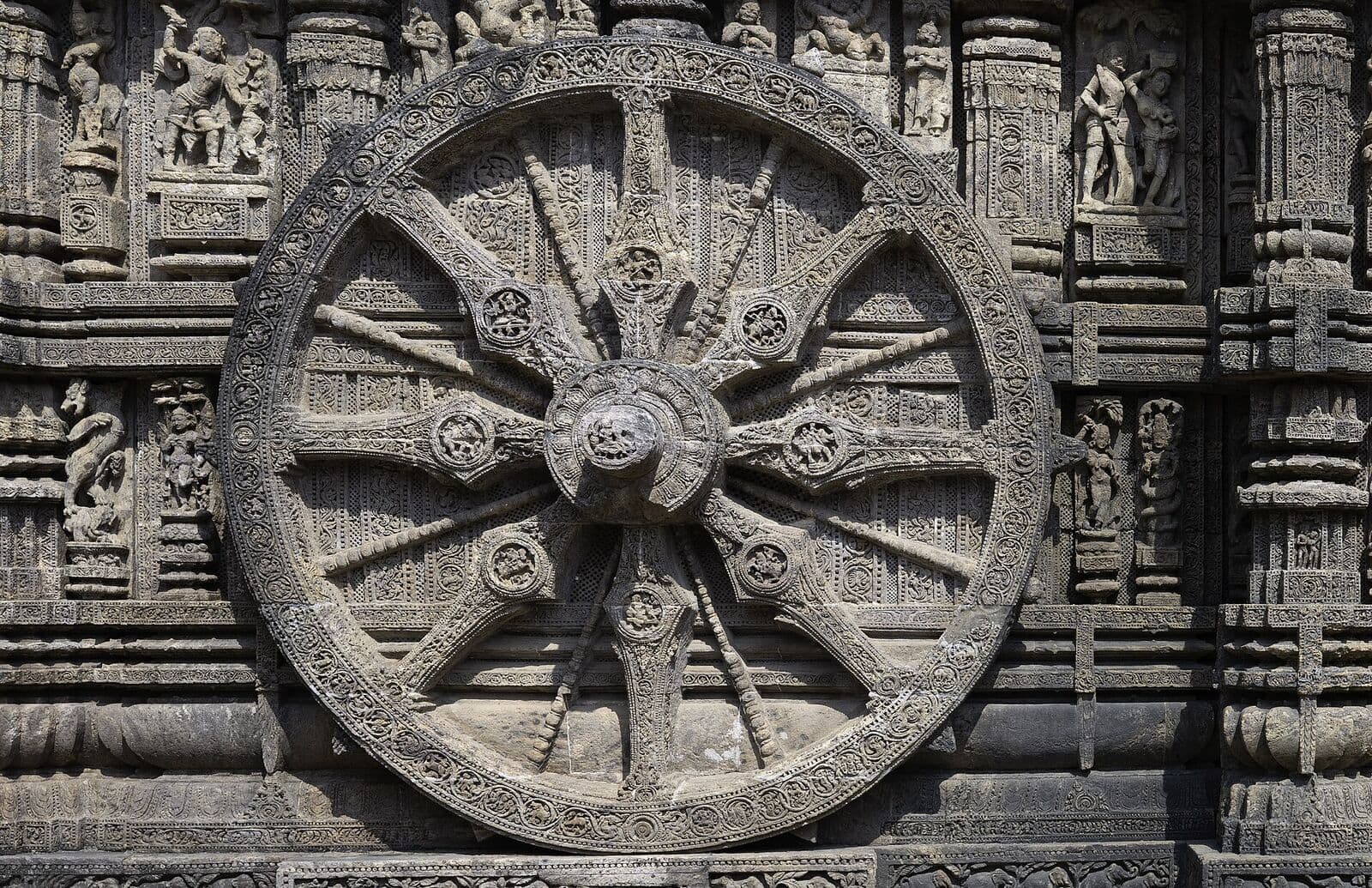
Konark: The Chariot of the Sun
The Sun Temple at Konark is a cosmological machine disguised as architecture — twelve pairs of wheels, seven horses, and a sanctum facing the dawn.
Jan 31, 2024·9 min read