History
The Charaka Samhita on the Good Physician
Two thousand years ago, India's foundational medical text defined the doctor by knowledge, skill — and compassion sworn under oath.
Somewhere in the early centuries of the common era, the medical compendium bearing Charaka's name reached the question every profession must eventually face: what makes its practitioner good? The Samhita's answer runs on two tracks at once, and its refusal to separate them is its genius. A physician must possess shastra — the science — and he must possess something the text calls, without embarrassment, maitri: friendliness, loving concern for the patient. Knowledge without compassion is a lamp without oil; compassion without knowledge, a fire in a fool's hands.
The fourfold instrument
Charaka's analysis of medical practice begins with a systems observation: healing has four limbs — physician, medicine, attendant, patient — and each must have four qualities for treatment to succeed. The physician: excellence in theory, breadth of practical experience, dexterity, and purity. The drug: abundance, applicability, multiple forms, potency. The nurse: knowledge, skill, sympathy, cleanliness. Even the patient bears qualifications: memory, obedience to instruction, courage, and the ability to describe symptoms. Therapy, in this picture, is not a commodity dispensed but a collaboration staffed — and the text is centuries ahead of modern patient-safety literature in insisting that outcomes hang on the weakest of the sixteen qualities, not the strongest.
He who practices medicine out of compassion for all creatures, not for wealth nor for pleasure, surpasses all.Charaka Samhita, Chikitsasthana 1.4
The oath of initiation
The Samhita preserves, in its Vimanasthana, a full initiation ceremony for the medical student, with an oath that rewards close reading. The initiate swears to remain celibate during study, to speak truth, to eat simply; to strive with his whole being for the patient's welfare; never to abandon a patient, never to exploit the household he enters, to keep its affairs confidential; to refuse treatment — the clause startles modern readers — to those bent on evil, and to attend even without fee those who have none to give. Where the Hippocratic oath binds a guild, Charaka's binds a person to a discipline of character: continued study for life ('the entire world is the teacher of the intelligent physician; the whole world, an enemy of the fool'), humility before colleagues, and the vow to enter every sickroom 'with mind intent on the patient's welfare — thinking of nothing else.'
An ethics still legible
It is tempting to read such passages as antique idealism, and that would be a mistake of scale. The Samhita is elsewhere ruthlessly practical — it discusses fees, reputation management, hopeless cases, and the quacks it calls 'imposters who wear the garb of physicians'. Its idealism is load-bearing: in a science where the practitioner is himself the chief instrument, the calibration of that instrument — his motives, habits, and steadiness — is a clinical variable. Two millennia later, medical education is reinventing this insight under the names professionalism, burnout prevention, and narrative medicine. The old text would approve, and would add only its original clause, the one that still sorts healers from providers in any century: out of compassion for creatures — bhuta-dayam prati — not for wealth, not for pleasure. That physician, says Charaka, surpasses all.
About the author
Prajna Insights Editorial DeskEditorial Desk
The collective byline for essays researched, drafted, and edited through the Prajna Insights editorial process, including AI-assisted drafting reviewed under Kiran Karanam's editorial responsibility.
Related Articles
Saints & Acharyas
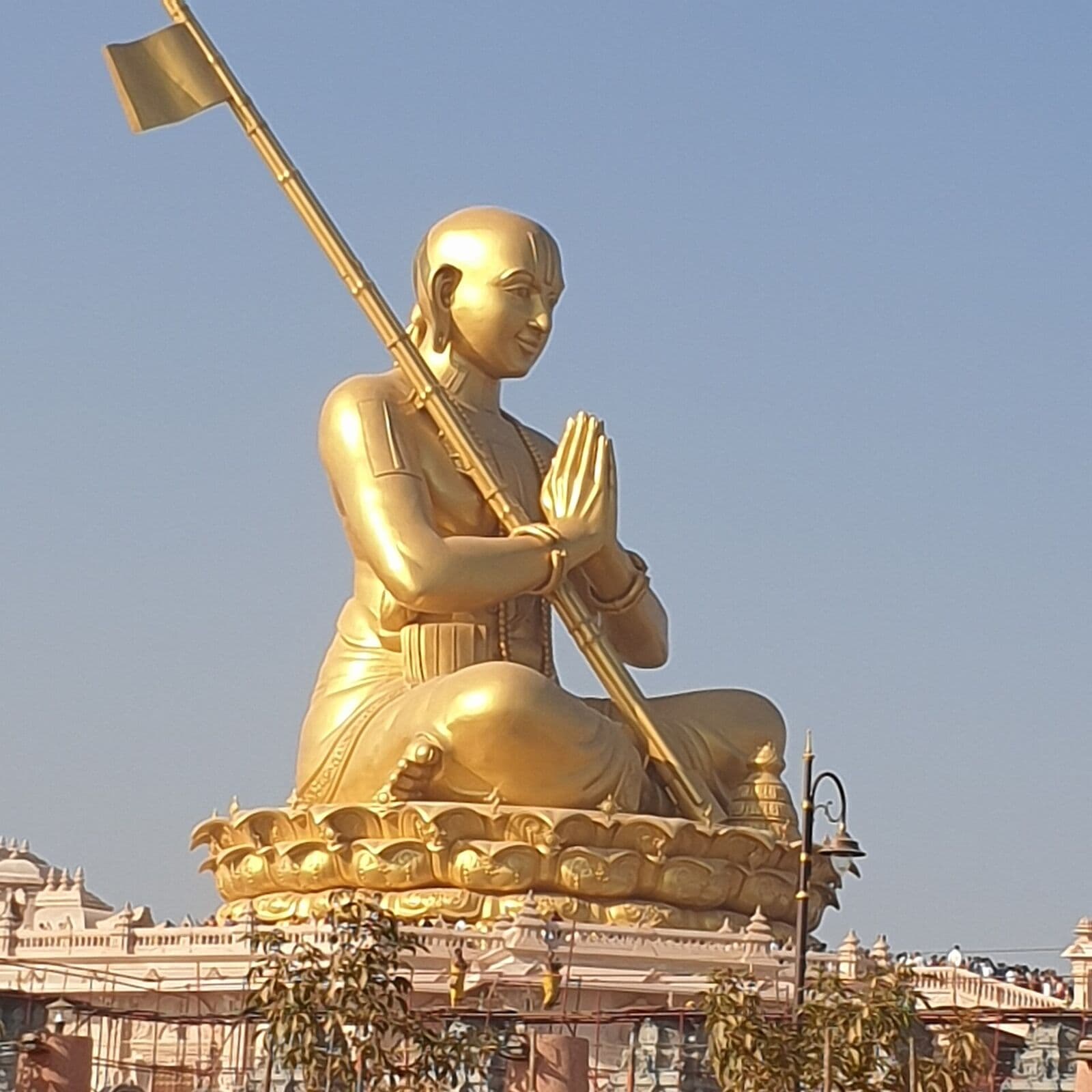
Ramanuja and the Embrace of Devotion
How Ramanuja built the intellectual house that bhakti lives in, and why he broke his vow of secrecy from a temple tower.
Apr 1, 2024·10 min read

Science & Cosmos
Ayurveda Beyond the Doshas
The classical texts describe a complete philosophy of medicine — diagnosis, ethics, ecology — far richer than the wellness industry's three body types.
Mar 18, 2024·8 min read
Practice
Fasting as Focus: The Inner Logic of Ekadashi
The elegant psychology behind the tradition's twice-monthly fast — and what an empty stomach has to do with a full attention.
Feb 14, 2024·6 min read