Practice
Japa: The Practice of the Name
The simplest practice in the tradition may be its most sophisticated technology of attention.
Of all the practices Sanatana Dharma offers, japa — the repetition of a mantra, usually counted on a mala of 108 beads — looks the least impressive. No posture to master, no philosophy to absorb, no experience promised. You say the name. You say it again. The Gita, however, ranks it startlingly high: among yajnas, Krishna says, I am the yajna of japa (10.25). The tradition has always known something about repetition that our novelty-addicted age has forgotten.
Why repetition works
The mind, left to itself, also practices japa — it repeats worries, grievances, advertisements. Mental noise is not an absence of repetition but an unchosen repetition. Japa replaces the default loop with a deliberate one. The mantra gives the verbal mind — the layer that must always be saying something — a single, luminous thing to say, and in doing so it frees attention from the tyranny of commentary. This is why teachers describe the mantra as a walking stick, a raft, a lamp in a doorway: homely images for a tool that works not by force but by occupation.
Give the mind one thing to hold, and it will slowly release the ten thousand things it did not know it was holding.
The mechanics
The classical instructions are few and precise. A mantra received from one's tradition or teacher, kept constant — the practice compounds within one sound, not across many. The mala held at the heart, turned bead by bead with the middle finger and thumb, the index finger — the ego's finger, pointing and blaming — kept aside. The meru bead never crossed; at the 108th repetition, the mala is turned. Three speeds, in deepening order: vaikhari, aloud; upamshu, whispered; manasika, purely mental — the last held highest because it requires the most complete attention. Morning and evening sittings anchor the practice; the counting is not bureaucracy but honesty, the difference between intending to practice and practicing.
What the name carries
But japa is not, finally, a concentration technique wearing religious clothes. In the bhakti traditions the name is not a label for the divine but a form of it — abhinnatvan nama-naminoh, no difference between the name and the named. The practitioner is not repeating information about God; she is keeping company. And company, kept daily, changes a person the way a river changes stone: nothing on any given day, everything over the years. Tulsidas, Namdev, Tyagaraja, and the Alvars left detailed testimony from the far end of this road. The practice they describe is the one in your hand: a string of beads, a name, and the slow discovery that you are no longer saying the mantra — it is saying itself, and you are listening.
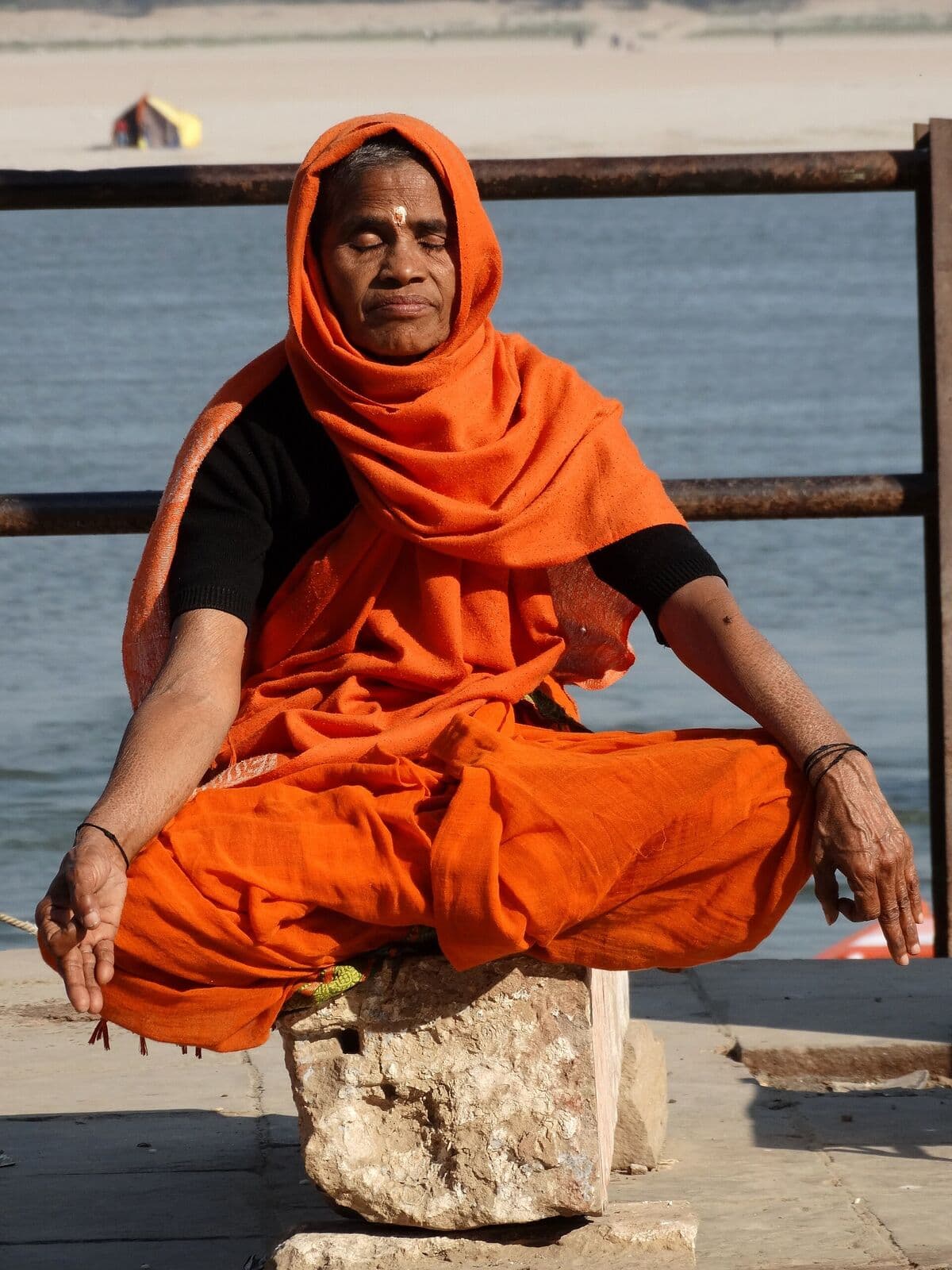
Header image: Adam Jones from Kelowna, BC, Canada / Wikimedia Commons, CC BY-SA 2.0
About the author
Prajna Insights Editorial DeskEditorial Desk
The collective byline for essays researched, drafted, and edited through the Prajna Insights editorial process, including AI-assisted drafting reviewed under Kiran Karanam's editorial responsibility.
Related Articles
Practice
The Power of Daily Spiritual Discipline
Simple yet powerful practices that transform the mind and life.
May 5, 2024·7 min read

Darshana
Sankhya: The Count of Reality
Before you can be free of the world, said Kapila's school, you must count it. The tally came to twenty-five.
Jan 21, 2024·10 min read
Practice
Pilgrimage: Why We Walk
Chardham, Kailash, Sabarimala, Pandharpur — the geography of Indian pilgrimage is deliberately difficult, and the difficulty is the point.
Dec 27, 2023·9 min read