Practice
The Power of Daily Spiritual Discipline
Simple yet powerful practices that transform the mind and life.
The tradition has a beautiful word for daily practice: nitya karma — that which is done always. Not when inspired. Not when time permits. Always. And embedded in that word is a psychological insight the modern behavioral sciences have only recently caught up with: transformation is not produced by intensity. It is produced by repetition.
Small, daily, non-negotiable
Every lineage of Sanatana Dharma, whatever its philosophical differences, converges on the same architecture of practice. Something at dawn. Something before food. Something before sleep. The units are small — a sandhya prayer takes minutes; a round of japa, perhaps ten — but they are fixed, and their fixity is the point. A practice negotiated daily with the mood of the moment will lose the negotiation most days.
Sadhana is not what you do when you feel spiritual. It is what you do so that you may, occasionally, feel spiritual.
The classical texts are unsentimental about this. Patanjali defines practice as effort that becomes drdha-bhumih — firmly grounded — only when 'cultivated for a long time, without interruption, with devotion' (Yoga Sutra 1.14). Three conditions, and the middle one is the hardest. Interruption is how practices die: never by decision, always by erosion.
What a minimal sadhana looks like
Asked by householders where to begin, teachers across sampradayas tend to prescribe some version of the same short list:
- Rise before the household. The brahma-muhurta, the hour and a half before sunrise, is prized not for magic but for silence — the one stretch of the day the world has not yet claimed.
- Offer the day. A few minutes of prayer or sandhya, framing the day as something given rather than owned.
- Ten minutes of japa or dhyana. One mantra, one mala, one sitting posture, unvaried. Variety is the ego's favourite disguise for restlessness.
- Read one verse. A single shloka of the Gita with its meaning, allowed to accompany you into the day, outweighs a chapter skimmed.
- Close the account at night. A brief review — where did I act well, where badly — and the deliberate setting down of the day before sleep.
Nothing on this list is difficult. That is by design. The discipline is not in the difficulty of the acts but in their dailiness, the way a river's power lies not in any single drop but in the fact that it never stops.
The compounding of attention
What does such practice actually do? The Gita's phrase is atma-samyama-yoga — the yoga of self-command. Each small kept promise transfers a measure of authority from impulse to intention. Kept for months, the practice begins to compound like interest: the mind reaches for the mantra on its own in a crisis; patience appears where irritation used to live; the day acquires a keel. Nothing dramatic ever seems to happen, and then one year you look back and find that everything has.
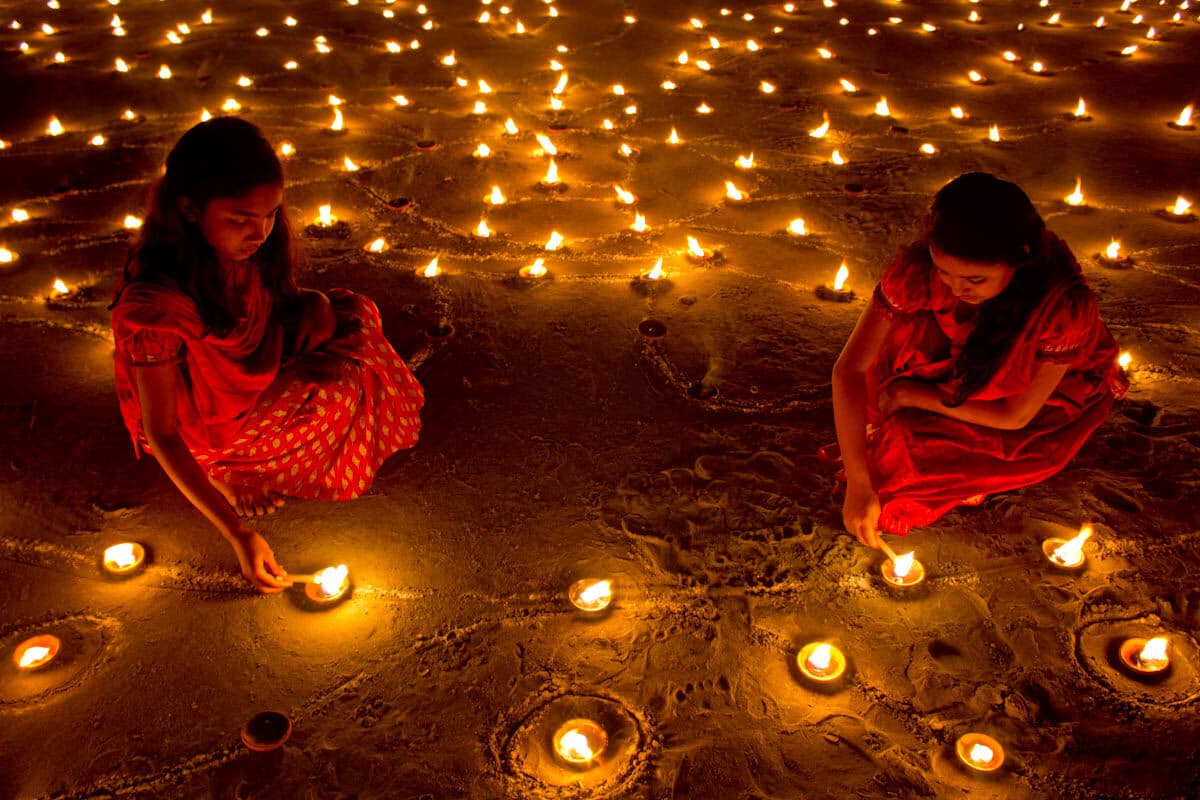
Header image: Khokarahman / Wikimedia Commons, CC BY-SA 4.0
About the author
Prajna Insights Editorial DeskEditorial Desk
The collective byline for essays researched, drafted, and edited through the Prajna Insights editorial process, including AI-assisted drafting reviewed under Kiran Karanam's editorial responsibility.
Related Articles
Practice
Japa: The Practice of the Name
Repeating a mantra seems almost too simple to work. That simplicity is precisely the engineering.
Apr 8, 2024·6 min read
Practice
Pilgrimage: Why We Walk
Chardham, Kailash, Sabarimala, Pandharpur — the geography of Indian pilgrimage is deliberately difficult, and the difficulty is the point.
Dec 27, 2023·9 min read
Scriptures
Karma Yoga in the Bhagavad Gita
Understanding selfless action through Lord Krishna's timeless teachings.
May 12, 2024·8 min read