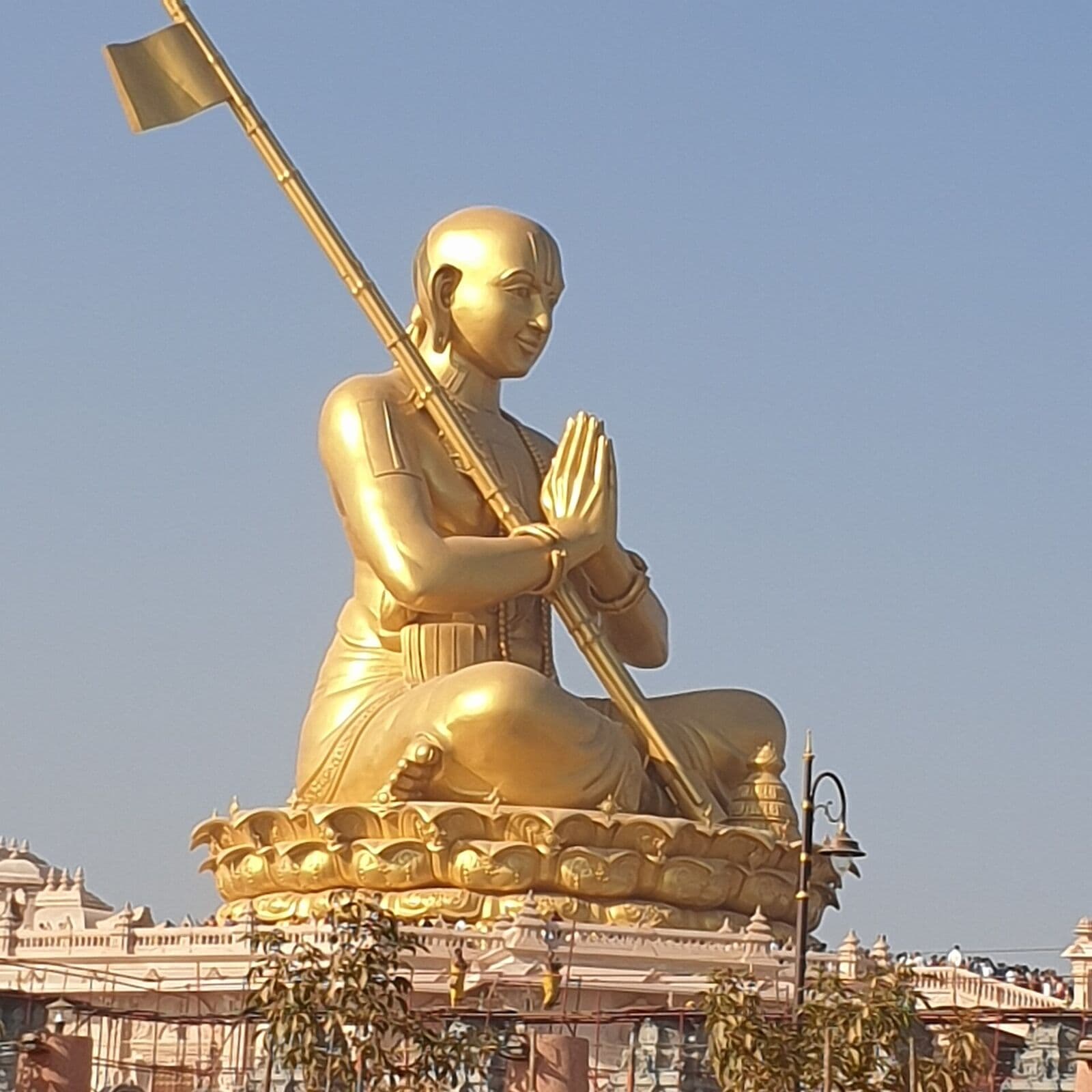
Saints & Acharyas
Ramanuja and the Embrace of Devotion
The philosopher of Vishishtadvaita gave bhakti its intellectual foundations — and shouted a secret mantra from a temple tower.
Every tradition keeps one story that tells you everything. For Sri Vaishnavas, it is this: Ramanuja, after long persistence, receives from his teacher Goshthipurna the secret eight-syllable mantra — om namo narayanaya — with the warning that revealing it improperly means hell. Ramanuja climbs the temple tower at Thirukoshtiyur and calls the mantra out to the crowd below. Confronted, he answers: if one man's hell purchases liberation for all these, the price is good. Goshthipurna, the tradition says, embraced him and called him greater than his teacher.
The qualified whole
Ramanuja's philosophy — Vishishtadvaita, 'non-duality of the qualified' — is the metaphysics of that story. Against Advaita's teaching that all distinction is finally unreal, Ramanuja argued that souls and world are real, and are related to Brahman as a body to its soul: distinct, yet incapable of independent existence, forming together one qualified whole. The universe is not God's illusion; it is God's body. Every soul is a limb of the divine — which is why abandoning one soul to save another's secret could never be dharma.
The world is not a veil over Brahman. It is Brahman's own body — and nothing that is his body can be worthless.The core intuition of Vishishtadvaita
His Sribhashya, the great commentary on the Brahma Sutras, gave bhakti what it had lacked: a complete philosophical grammar. Devotion was no longer the concession offered to those who could not manage jnana. It was the natural relation of part to whole, made conscious.
Two languages, one theology
Ramanuja inherited two streams: the Sanskrit Vedanta of the Upanishads and the Tamil devotional poetry of the Alvars, saint-poets who had sung of Vishnu in the language of lovers and children. His genius — and that of his school after him — was to declare both authoritative: ubhaya-vedanta, the dual Vedanta. The philosophical hymns of the Tiruvaymoli were to be honoured alongside the Upanishads. It was a decision about language with enormous consequences: theology could speak vernacular, emotion could carry doctrine, and the gates of the highest teaching stood open to those who would never read Sanskrit.
The administrator of grace
Like Shankara before him, Ramanuja built. For decades he administered the great temple at Srirangam, reorganizing its worship and finances; the temple's ritual life still runs substantially on his arrangements. Driven into exile by a hostile Chola king, he spent years in Karnataka, where the Melukote temple and community he established still flourish. He died, tradition says, at 120, leaving a school whose later split into northern and southern streams — the cat's grip of total surrender versus the monkey's grip of cooperating effort — testifies to how seriously his heirs took the mechanics of grace.
His legacy is easiest to see by its breadth: Ramananda in the north, and through him Kabir and the Sant tradition; the theology that underwrites most of India's living Vaishnava practice; and the simple, radical picture at the center — a God who has a body, and whose body is us.
About the author
Prajna Insights Editorial DeskEditorial Desk
The collective byline for essays researched, drafted, and edited through the Prajna Insights editorial process, including AI-assisted drafting reviewed under Kiran Karanam's editorial responsibility.
Related Articles
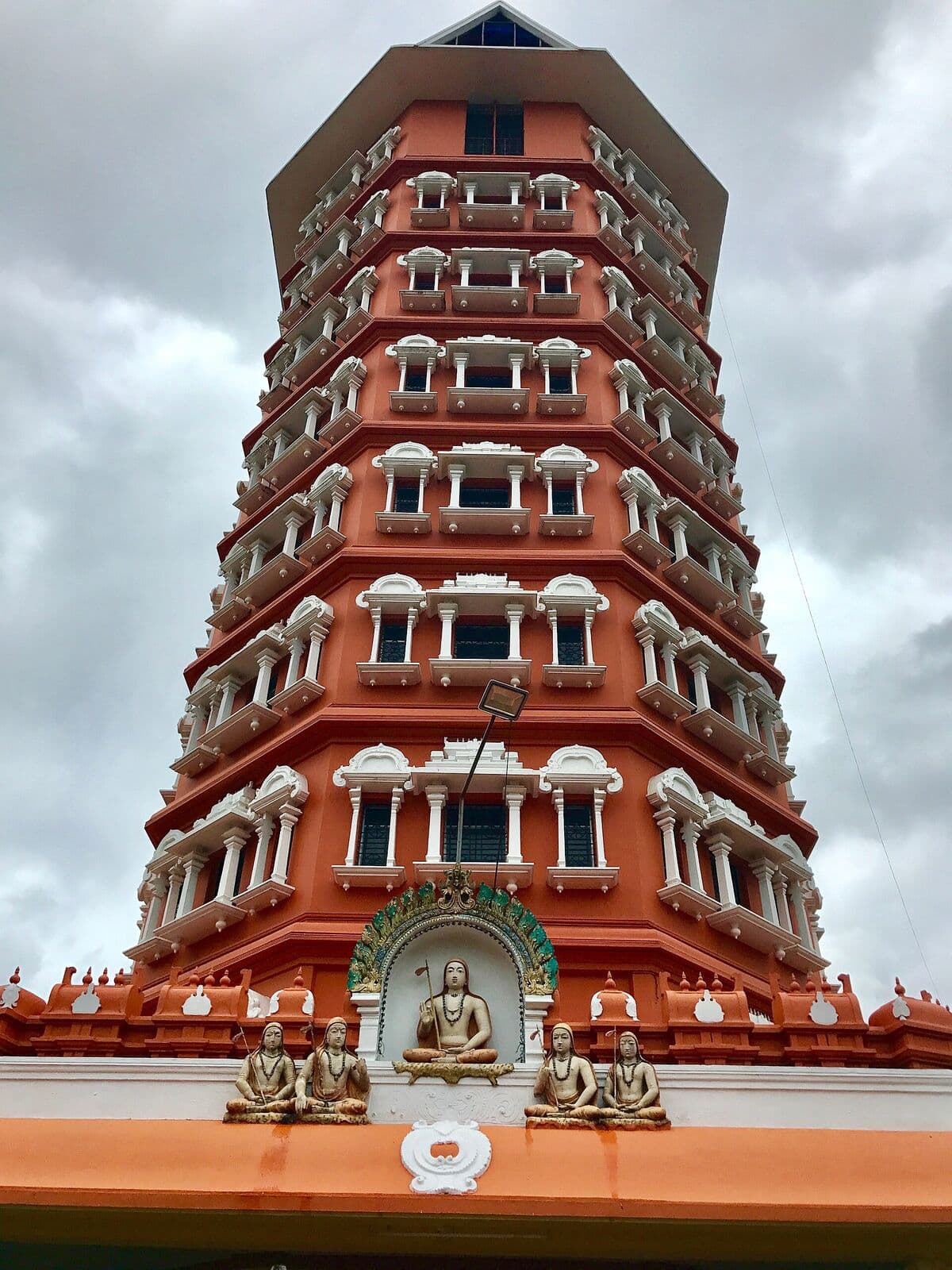
Saints & Acharyas
The Short, Blazing Life of Adi Shankaracharya
In thirty-two years, a boy from Kerala reshaped Indian philosophy and left institutions that have endured for over a millennium.
Apr 22, 2024·11 min read
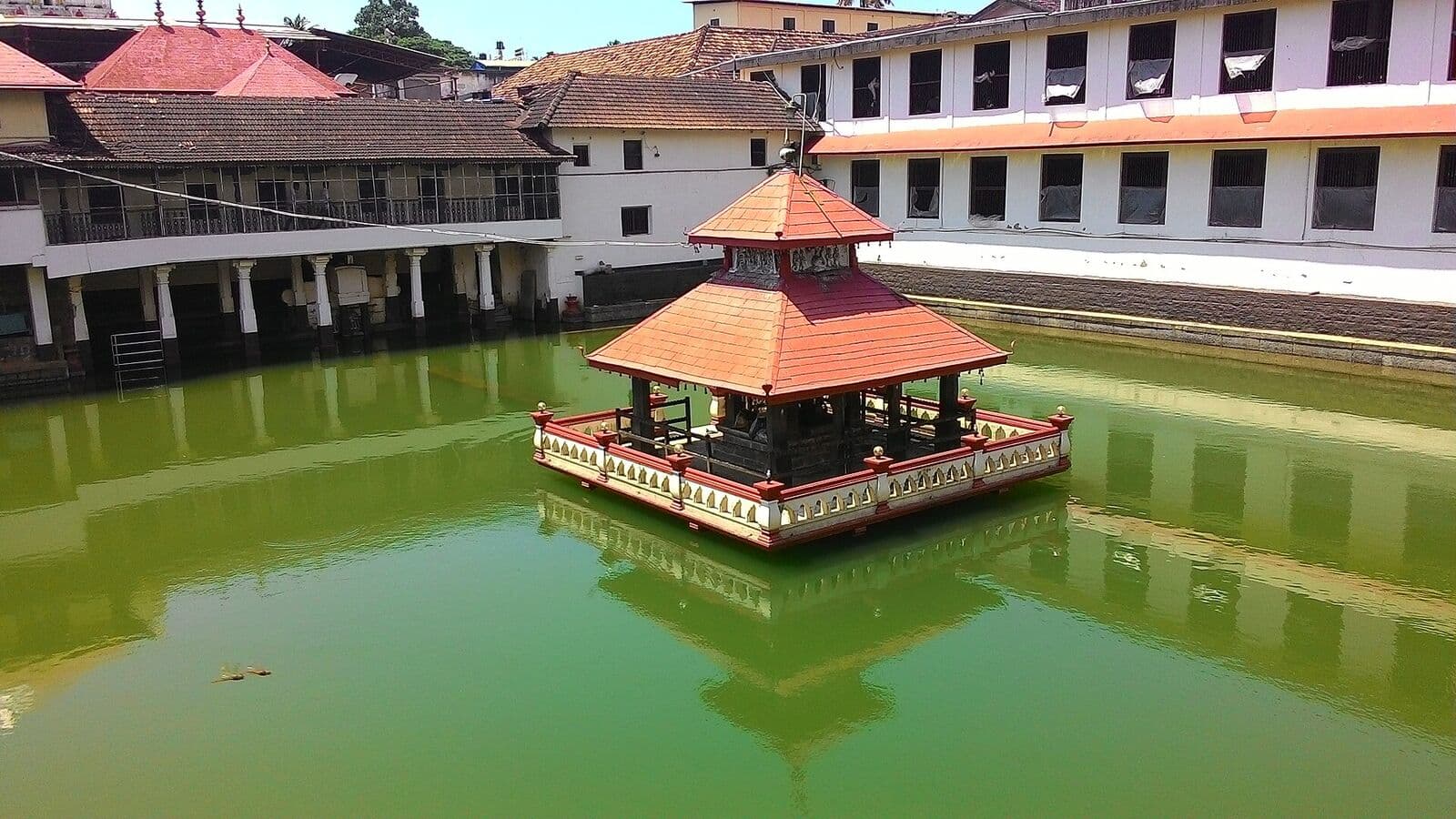
Darshana
What is Dvaita Vedanta?
An introduction to the profound philosophy of Madhvacharya and its relevance today.
May 8, 2024·10 min read
Darshana
The Six Darshanas: A Traveller's Map
A guide to the six classical schools of Indian philosophy — what each one asks, answers, and contributes to the whole.
Mar 25, 2024·13 min read