Scriptures
Hanuman: Strength in Service
The mightiest figure in the Ramayana forgets his powers until reminded — and therein lies the teaching.
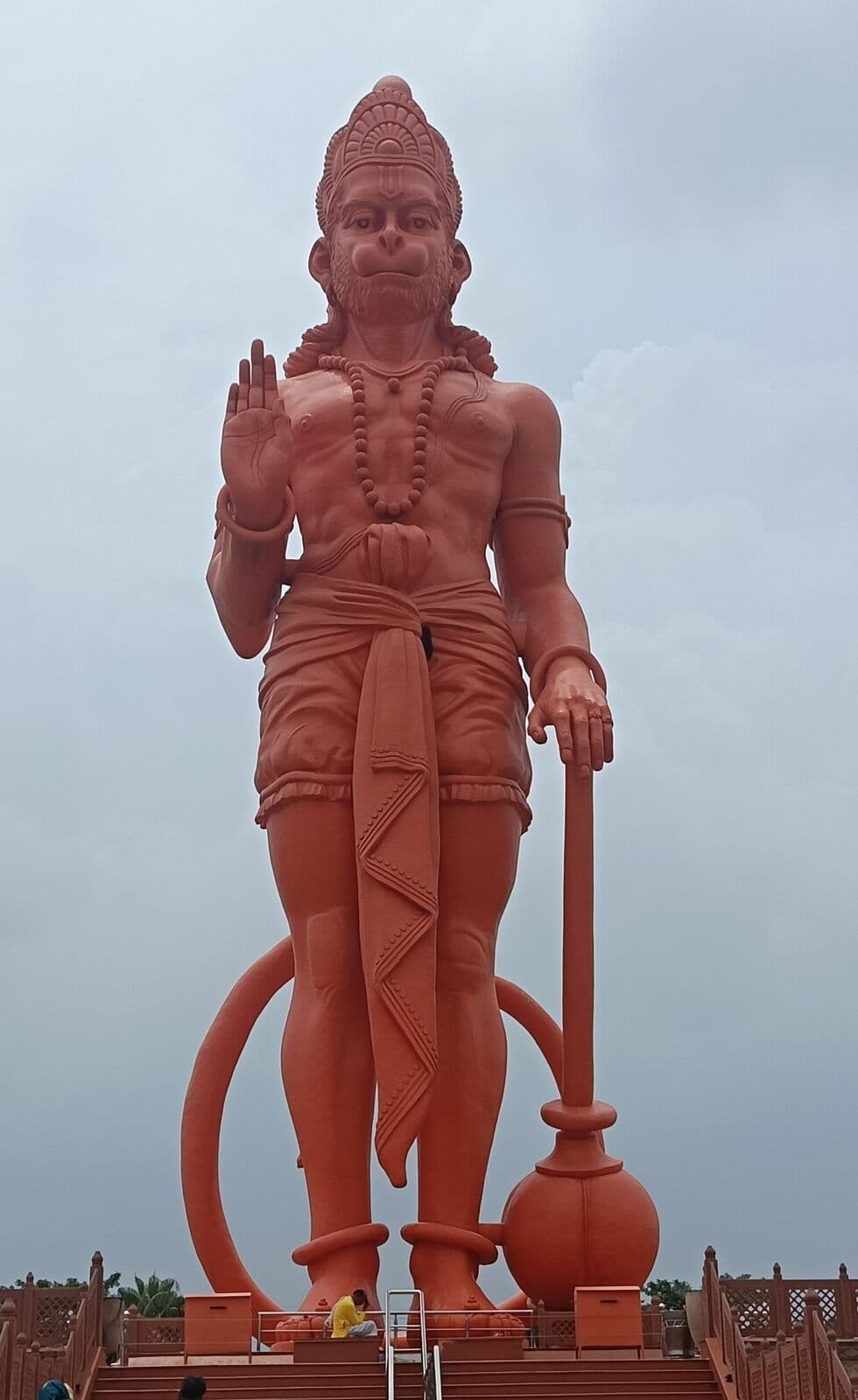
On the shore of the southern ocean, the monkey army halts. Sita is imprisoned across a hundred yojanas of water, and no one can make the leap. The eldest bear, Jambavan, turns to a quiet figure sitting at the edge of the council and says, in effect: you have forgotten who you are. As a child you leapt for the sun itself; a curse made you unable to remember your strength until another reminds you. Rise. And Hanuman rises, grows vast against the sky, and jumps.
The curse that teaches
The curse is the most psychologically exact device in the epic. Hanuman's strength is boundless but inaccessible to self-regard: he cannot flex it, display it, or brood on it. It becomes available only when summoned for another's need. The Ramayana has thus built, into its strongest character, a complete theology of power — strength is real, morally neutral, and safe only when its trigger is service rather than self. Ravana, his structural opposite, has comparable might wired to the opposite switch, and the epic is the account of which wiring survives.
Strength that remembers itself becomes pride. Strength that remembers its master becomes grace.
The servant as sovereign
Watch what Hanuman does with capability. In Lanka he is by turns spy, diplomat, arsonist, and comforter — shrinking to a cat's size to search the city, expanding to burn it, and sitting small and gentle before Sita in the ashoka grove, tail curled, speaking Rama's name softly so as not to frighten her. The shape-shifting is the point: ego has a fixed size, service scales to the task. Later, carrying the mountain of healing herbs because he cannot identify the one required, he embodies the servant's plain wisdom — when in doubt about the detail, bring your whole strength to the whole problem.
The tradition noticed something else: the epic's strongest figure is also its finest scholar. Rama's first impression of Hanuman, in Kishkindha, is of his flawless grammatical speech; tradition counts him among the nine masters of grammar and the greatest of the eleven Rudras, and folk tradition everywhere makes him the patron of wrestlers and students alike. Strength and learning, the combination our culture keeps trying to separate, sit together on one shoulder, in service.
Bhakti's own image
Why has this figure — not a king, not an avatar in the usual sense — become among the most worshipped in India, his shrines outnumbering many gods'? Because bhakti recognized its self-portrait. Asked by Rama what reward he desires, Hanuman asks only to remain while Rama's story is told. In the deepest iconography he tears open his chest to show Rama and Sita enthroned in his heart. The devotee does not want liberation from the beloved, only nearness — and the tradition holds that wherever the Ramayana is recited, Hanuman is present, listening, head bowed, the strongest being in the story kneeling to the story itself.
About the author
Prajna Insights Editorial DeskEditorial Desk
The collective byline for essays researched, drafted, and edited through the Prajna Insights editorial process, including AI-assisted drafting reviewed under Kiran Karanam's editorial responsibility.
Related Articles
Scriptures
Karma Yoga in the Bhagavad Gita
Understanding selfless action through Lord Krishna's timeless teachings.
May 12, 2024·8 min read
Scriptures
Why Rama Went to the Forest
The Ramayana's pivotal moment is a man treating his word as more real than his kingdom — and the epic never lets us forget the cost.
Mar 14, 2024·10 min read
Practice
The Power of Daily Spiritual Discipline
Simple yet powerful practices that transform the mind and life.
May 5, 2024·7 min read