Scriptures
The Bhagavad Gita's Final Verse
The Gita does not end with Krishna's last teaching. It ends with a courtier's verdict — and the verdict is the theology.
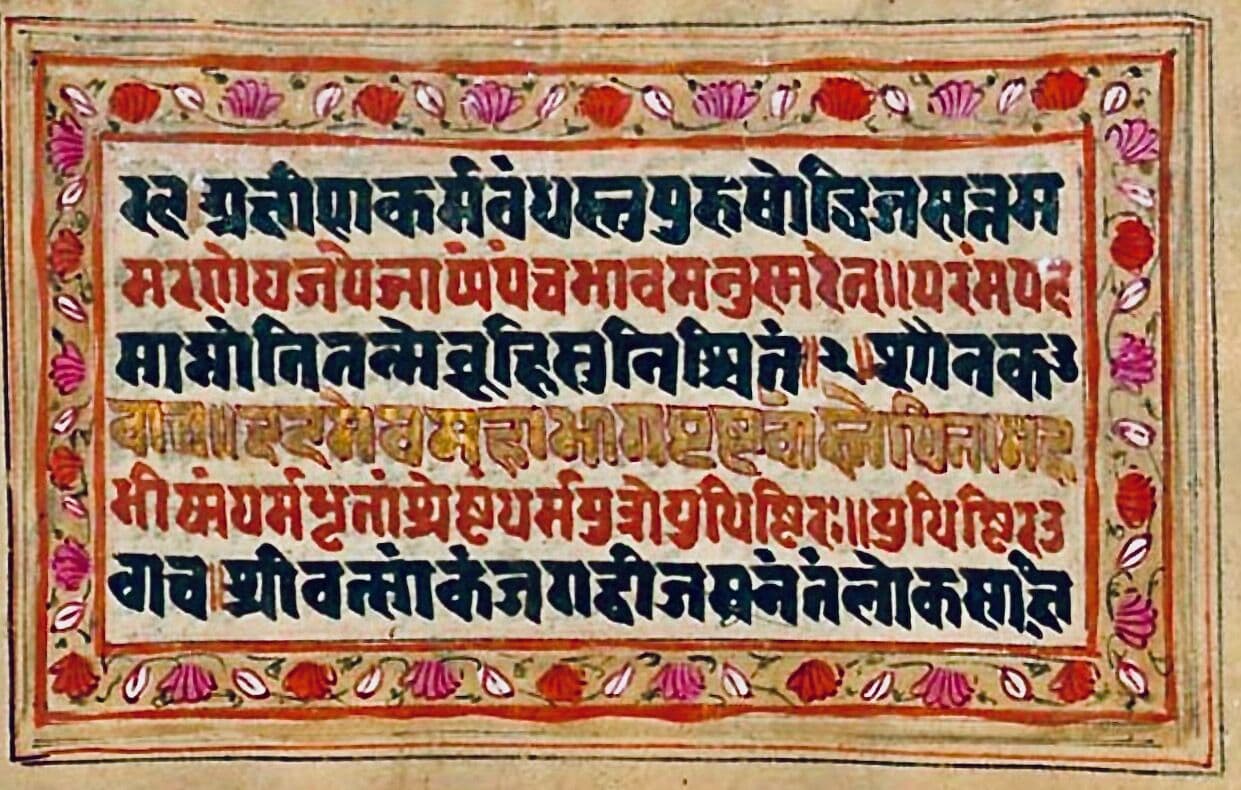
Ask readers how the Bhagavad Gita ends and most will reach for chapter eighteen's great crescendo — sarva-dharman parityajya, abandon all dharmas and take refuge in me alone — Krishna's final, staggering offer of grace. But the Gita does not end there. It ends four verses later, in the mouth of a man who has been almost invisible for seventeen chapters: Sanjaya, the blind king's charioteer-correspondent, who has been narrating the whole dialogue by grace of divine sight. The last verse of the Bhagavad Gita is his personal verdict:
Wherever there is Krishna, the lord of yoga, and wherever there is Partha, the archer, there — I am certain — are fortune, victory, prosperity, and firm justice.Bhagavad Gita 18.78
Why the last word belongs to a witness
The editorial decision is exquisite. The teaching has been given; Arjuna has answered — nashto mohah, my delusion is destroyed, I stand firm, I will act. The transaction between teacher and student is complete. And then the text steps back one frame, to the man who merely listened, and lets him draw the conclusion for the rest of us — who also merely listen. Sanjaya is the reader's representative inside the poem. His certainty (matir mama, 'this is my settled conviction') models the response the text hopes for: not that we fought at Kurukshetra, but that having overheard the conversation, we now know where fortune and firm justice are to be found.
The formula's two halves
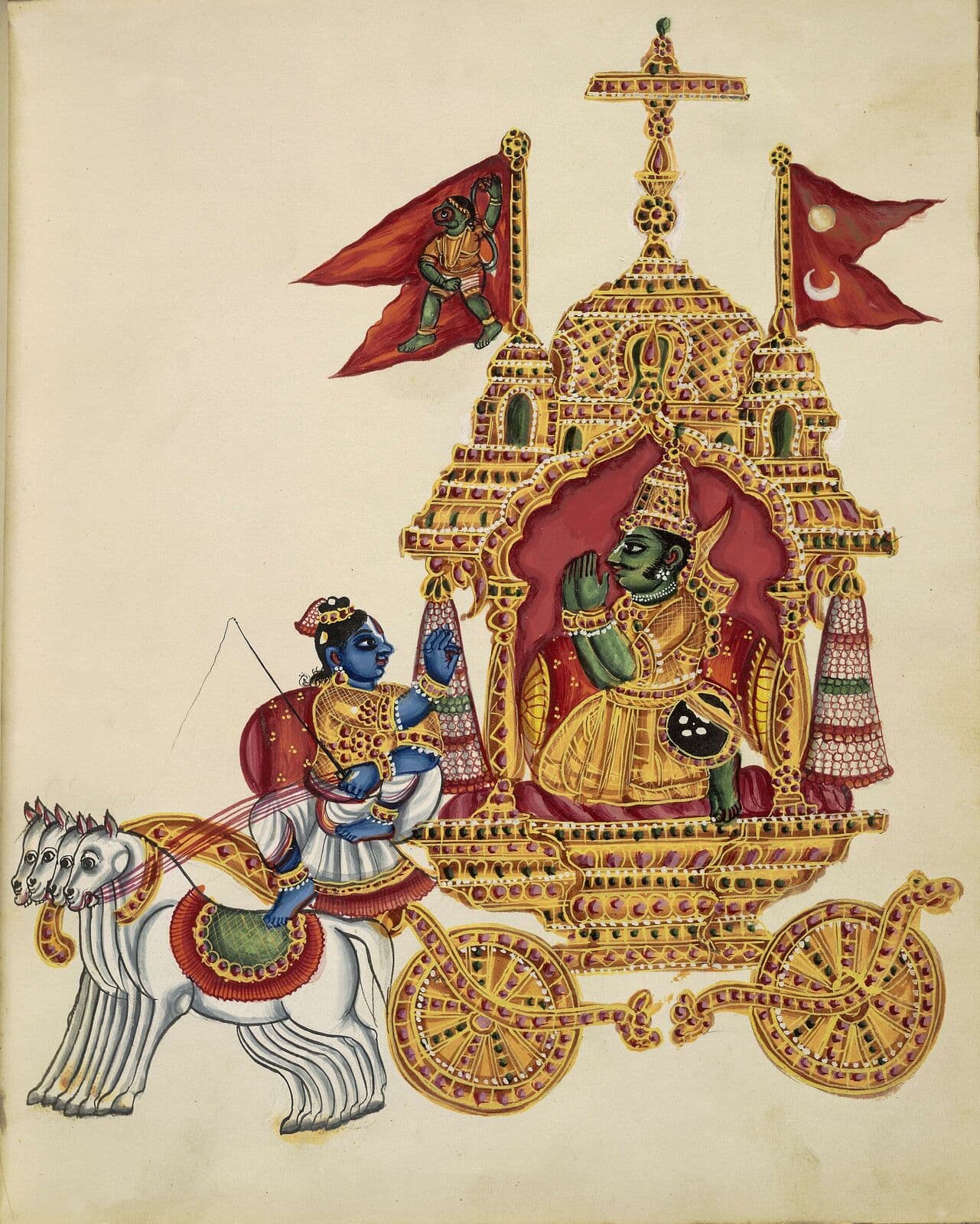
Look closely at what Sanjaya's verse actually requires. Not Krishna alone: the tradition is blunt that grace without effort is a chariot without a horse. Not Arjuna alone: effort without wisdom is the horse without a driver, which is precisely the Arjuna of chapter one, armed to perfection and collapsing. The promise attaches only to the conjunction — yatra… yatra… tatra: wherever both are present. Yogeshvara and dhanurdhara; the lord of yoga and the wielder of the bow; vision and instrument; the divine and the human doing what each does, together, in one chariot. Every commentarial school reads its own theology here, and all of them are right: the verse is a machine for generating the Gita's meaning at any level of interpretation.
Shri, vijaya, bhuti, dhruva nitih
And note, finally, what is promised: fortune, victory, prosperity — and dhruva nitih, unwavering justice, ethics that do not wobble. The Gita's last word on the spiritual life is delivered in the vocabulary of statecraft and flourishing. Whatever else the poem has taught — renunciation of fruits, equanimity, devotion — its closing claim is that the presence of the divine in partnership with committed human action is not merely privately consoling but publicly constructive: where that partnership stands, communities prosper and justice holds firm. Twenty-five centuries of readers have taken the verse as a benediction to recite at the end of study. It is that. It is also a testable proposition, renewed every time a person hitches skill to surrender and drives into the field of their own Kurukshetra.
About the author
Prajna Insights Editorial DeskEditorial Desk
The collective byline for essays researched, drafted, and edited through the Prajna Insights editorial process, including AI-assisted drafting reviewed under Kiran Karanam's editorial responsibility.
Related Articles
Scriptures
Karma Yoga in the Bhagavad Gita
Understanding selfless action through Lord Krishna's timeless teachings.
May 12, 2024·8 min read
Scriptures
Yudhishthira and the Burden of Dharma
The Mahabharata gives its most righteous man its heaviest burdens, and refuses him every easy answer.
Apr 4, 2024·12 min read
Darshana
Sharanagati: The Theology of Surrender
Is liberation earned or received? The doctrine of surrender answers with the tradition's most tender and most debated theology.
Jan 3, 2024·8 min read